Éva Fahidi
In 1944 at the age of eighteen, Eva Fahidi arrived at Birkenau together with her parents, her eleven-year-old sister, and other members of her family. Within moments of stepping off the train, a gesture from Josef Mengele determined their fate. Eva was directed to one side, while her parents, sister, and relatives were sent to the gas chambers and murdered on the day of their arrival.
The Holocaust shattered what had been a happy and secure childhood and left Eva carrying a trauma that would accompany her throughout her life. For decades, the memory remained difficult to confront. Only many years later did she begin to find ways of living with the loss and transforming personal grief into a commitment to remembrance.
In the later years of her life, Eva became one of Hungary's most respected Holocaust witnesses and educators. Through her writings, public lectures, and the expressive language of dance, she devoted herself to preserving the memory of those who did not survive and to sharing her experiences with younger generations.
Eva Fahidi passed away in 2023. Her voice, her testimony, and her unwavering dedication to remembrance continue to resonate through the lives she touched and the stories she preserved.
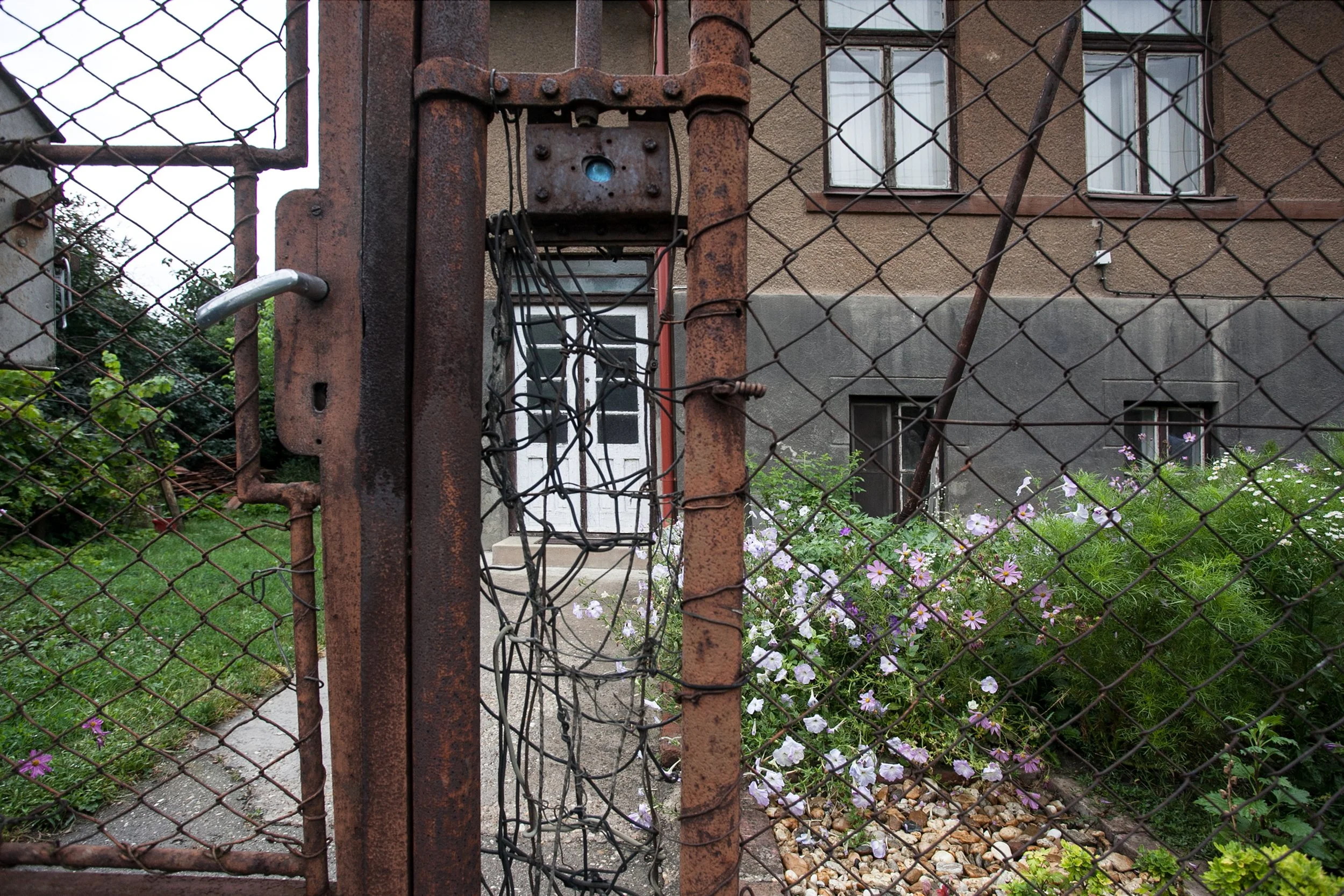
On November 4, 1945, Éva returned to her family home in Debrecen. With trembling hands, she rang the bell, and a stranger answered the door. When she told him the house was hers, he replied that it no longer mattered; it belonged to them now.
Debrecen, Hungary, 2016.
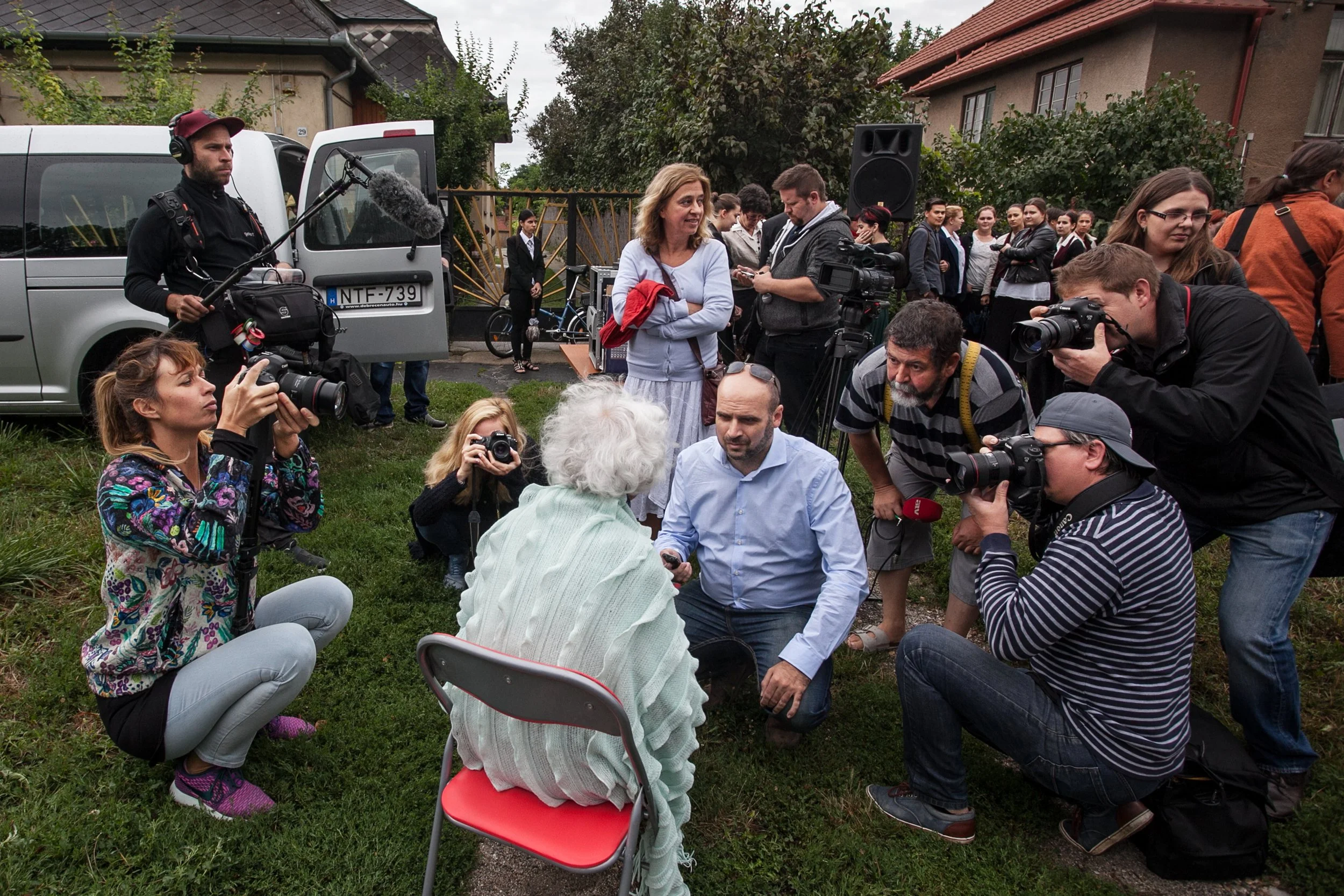
On August 11, 2016, following a civic initiative, a Stolperstein was installed in front of the family’s former home in Debrecen, commemorating Éva’s parents and her eleven-year-old sister, Gilike. Before the ceremony, Éva spoke to members of the press.
Debrecen, Hungary, 2016.
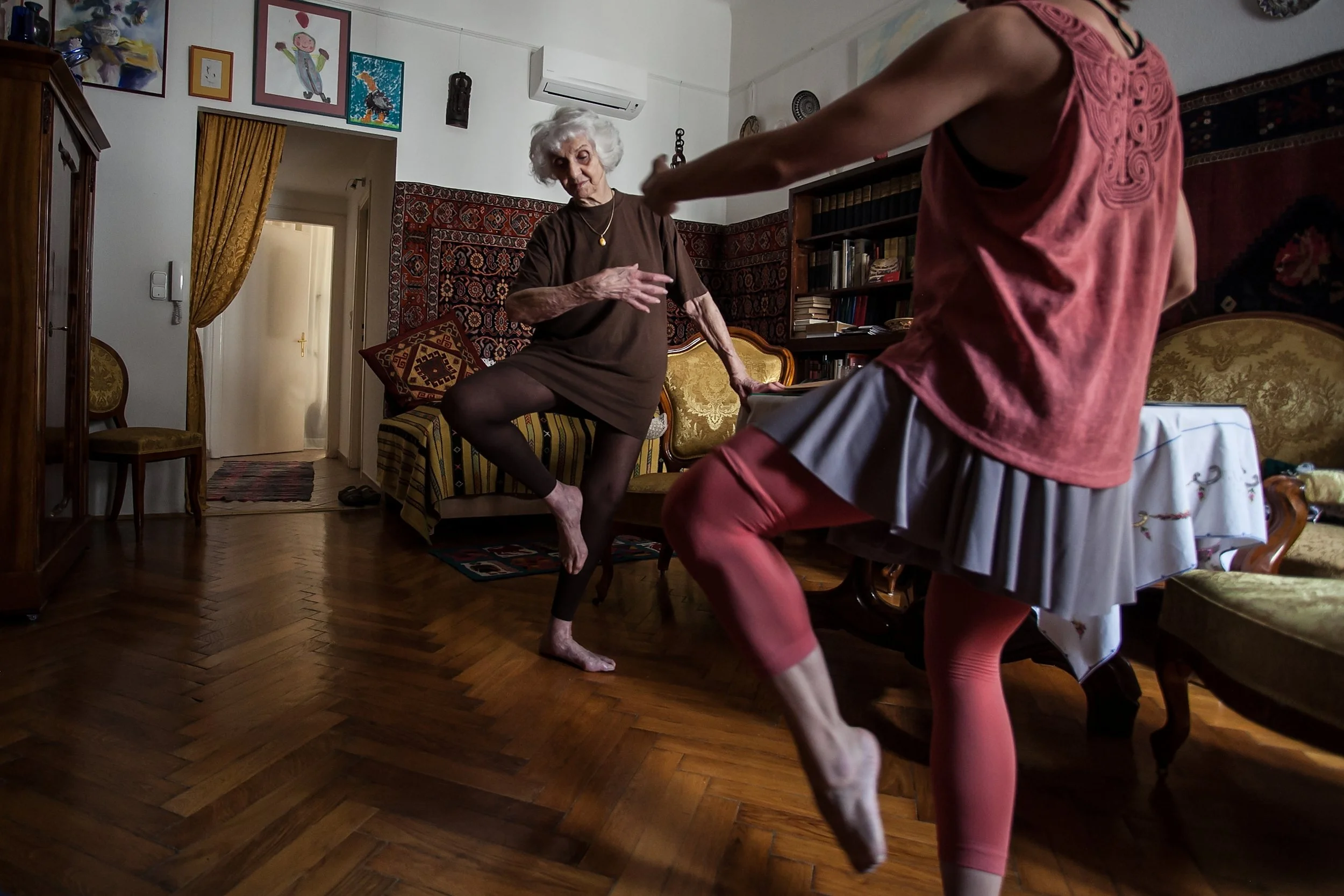
At Karola Perczel’s dance school in Debrecen, Éva learned the foundations of artistic movement and dance in her early childhood. What began there became a lifelong passion. Even in her later years, she continued to take regular dance lessons in her Budapest home.
Budapest, Hungary, 2016.
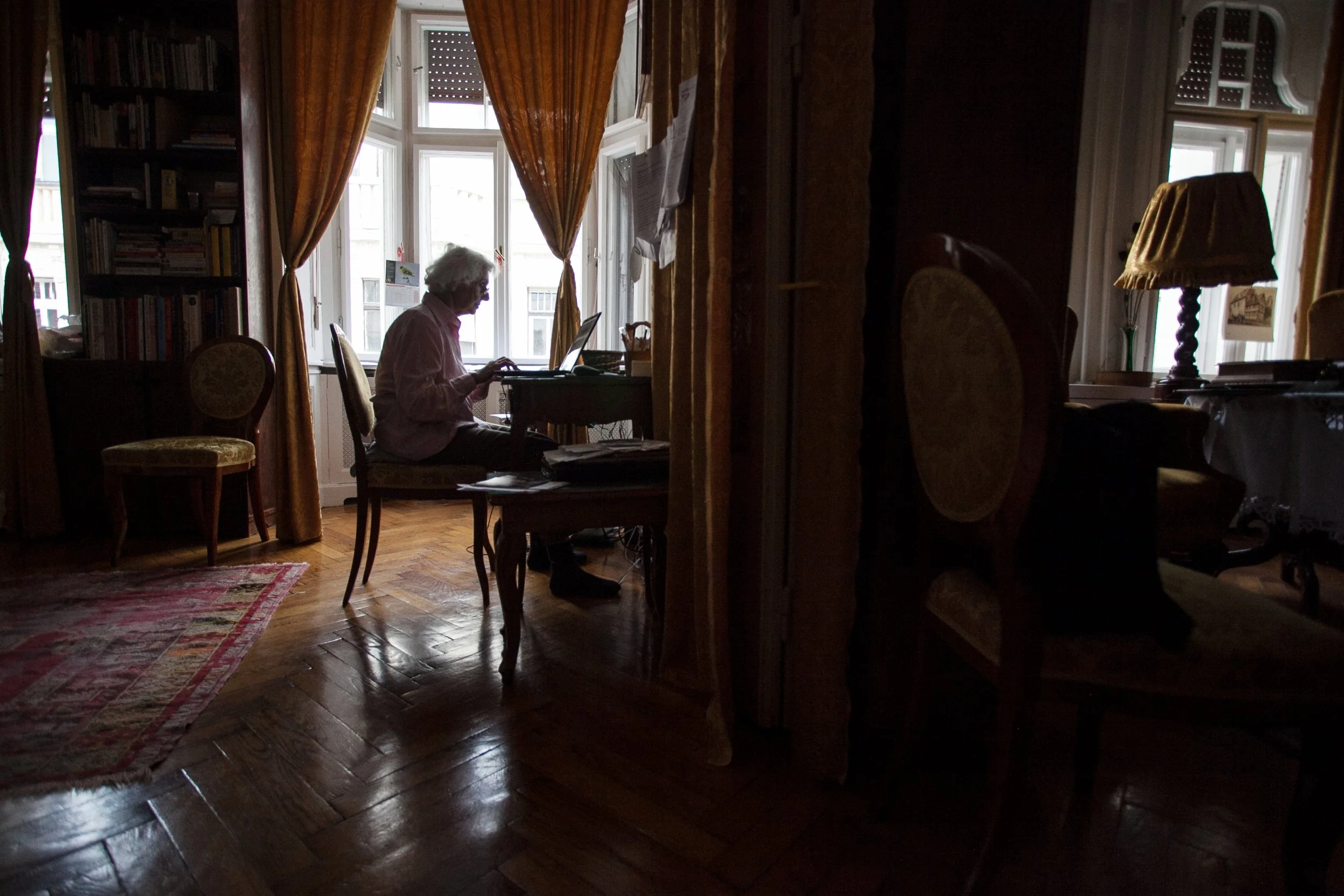
In her Budapest apartment, Éva working on her book The Subject and Object of Love.
Budapest, Hungary, 2016.
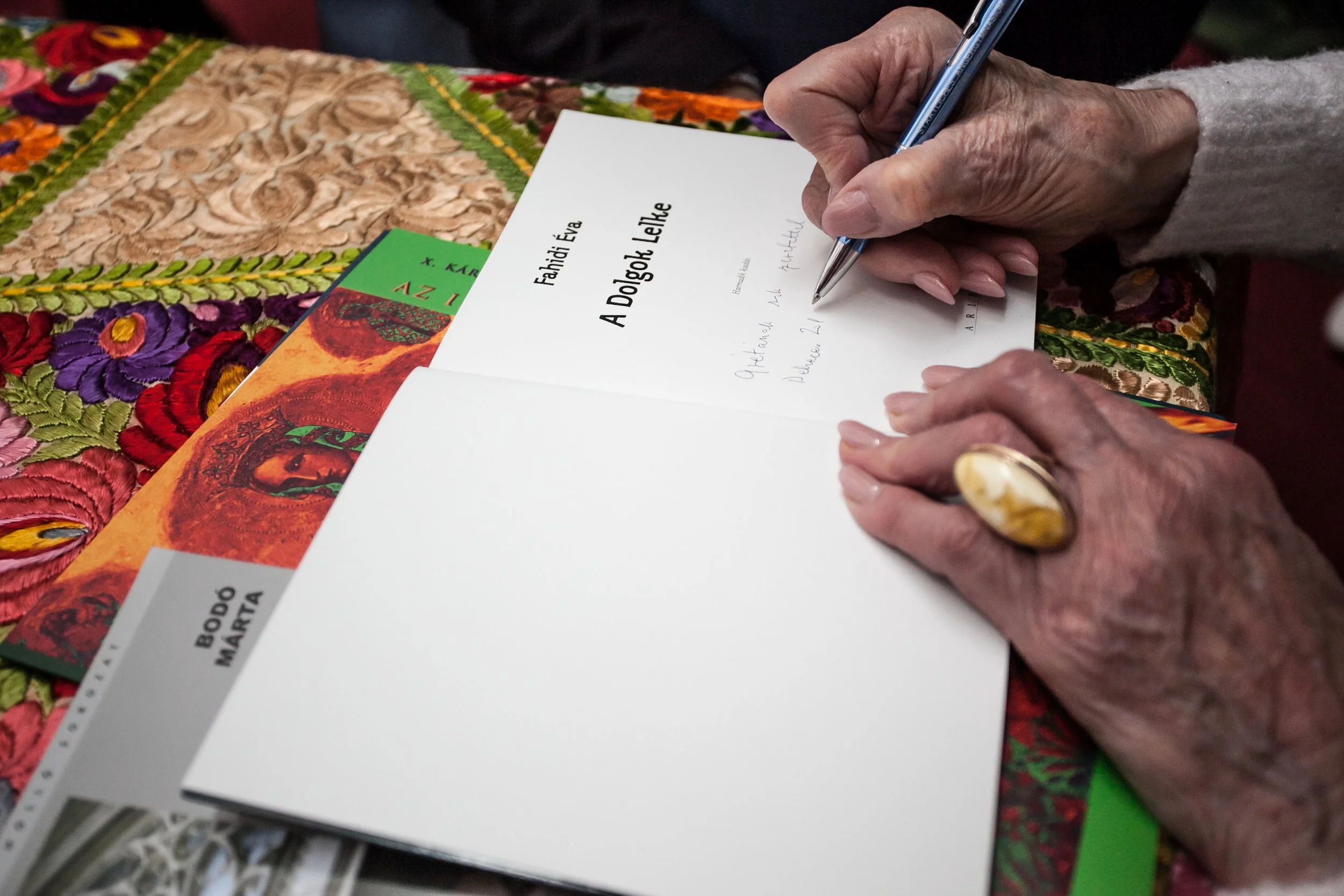
Following a lecture at Svetits College, Éva signs copies of the third edition of her acclaimed and deeply personal family saga. Written a decade earlier, the book tells the story of her own family while offering a vivid portrait of provincial Jewish bourgeois life in nineteenth- and twentieth-century Hungary.
Debrecen, Hungary, 2016.
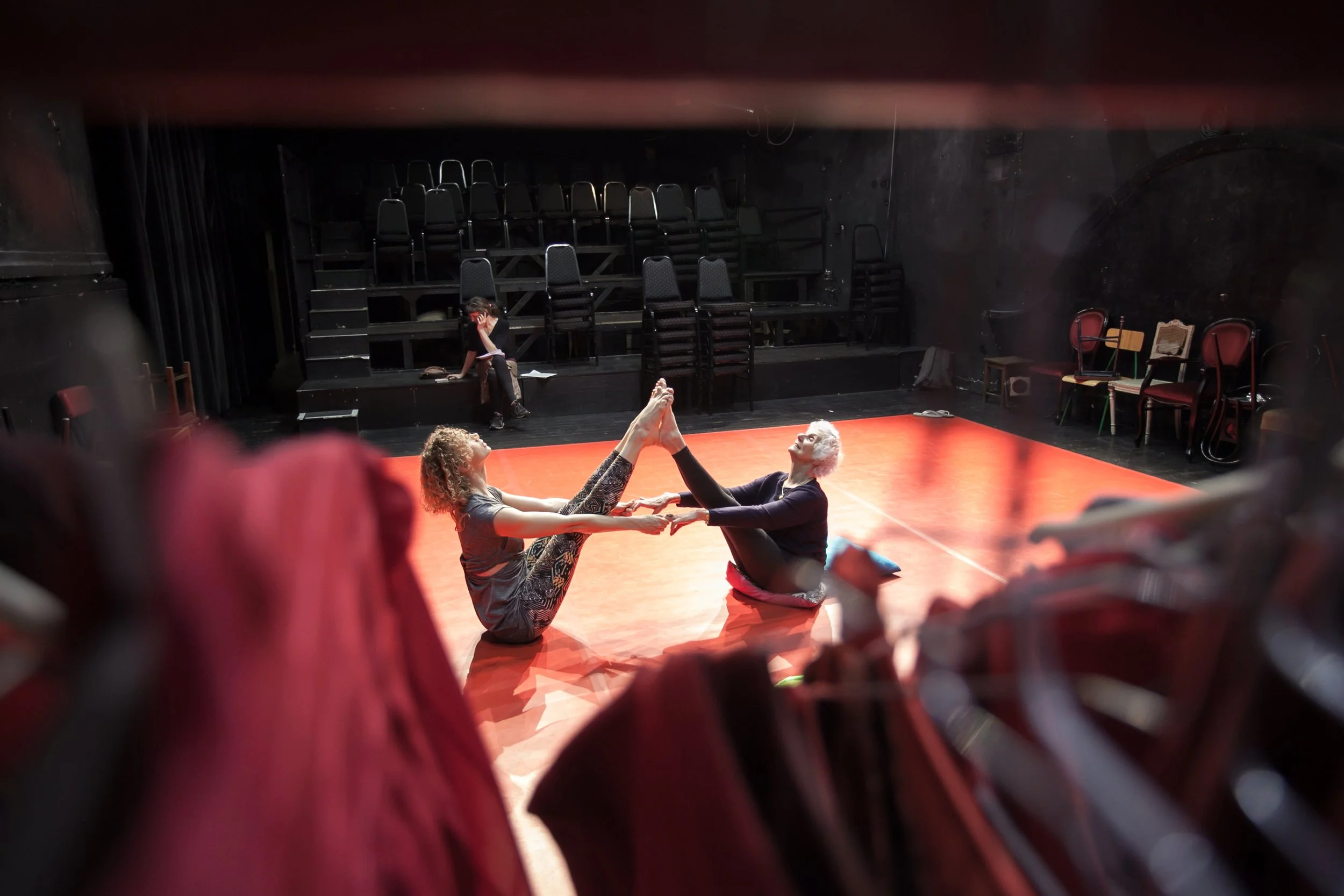
Éva Fahidi and Emese Cuhorka rehearse Sea Lavender on the studio stage of the Vígszínház. In the background stands director Réka Szabó. In 2016, the production received the Special Prize of the Hungarian Theatre Critics’ Association.
Budapest, Hungary, 2016.
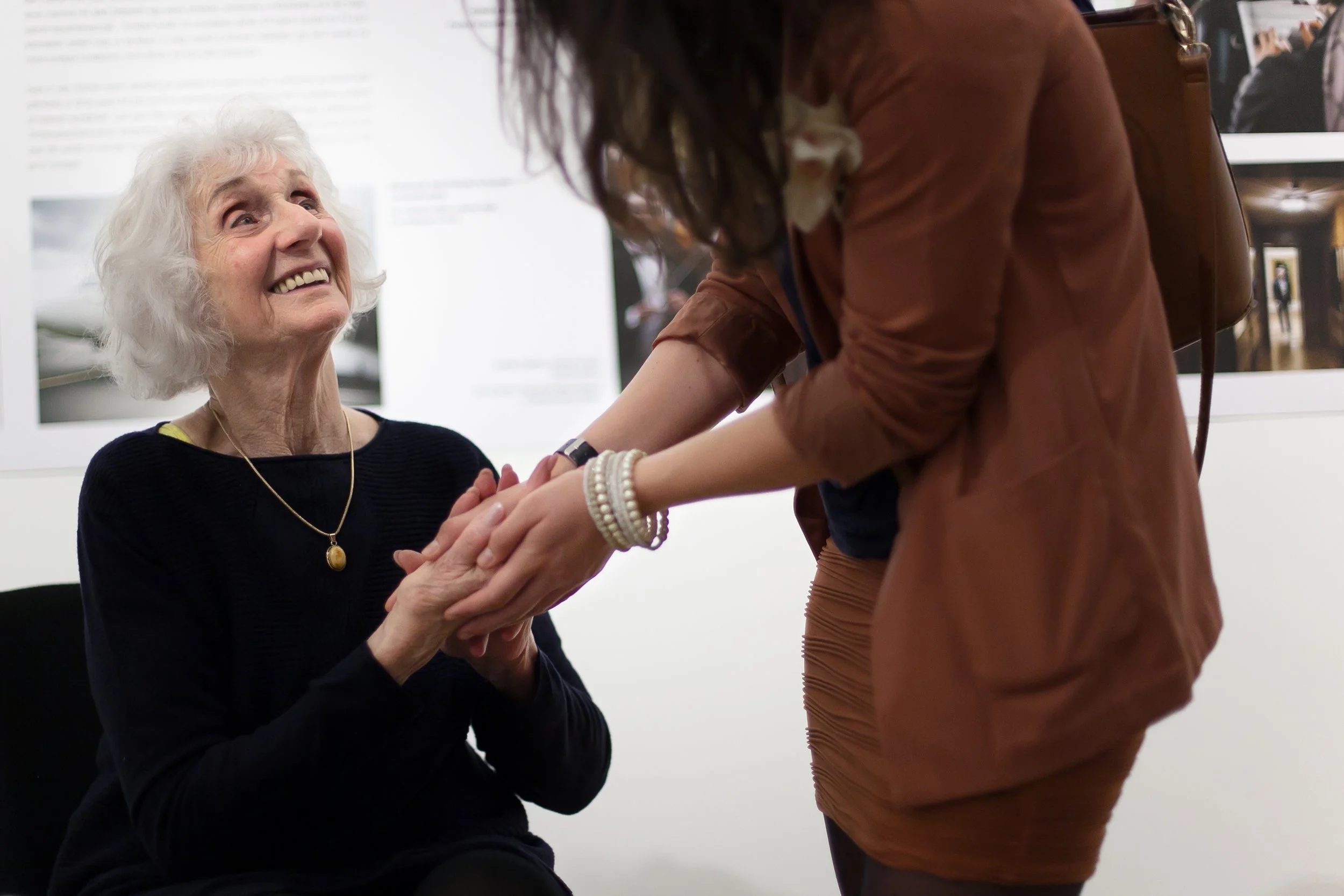
On April 1, 2016, following a performance of Sea Lavender at the Capa Center in Budapest, a young girl gently takes Éva’s hand.
Budapest, Hungary, 2016.
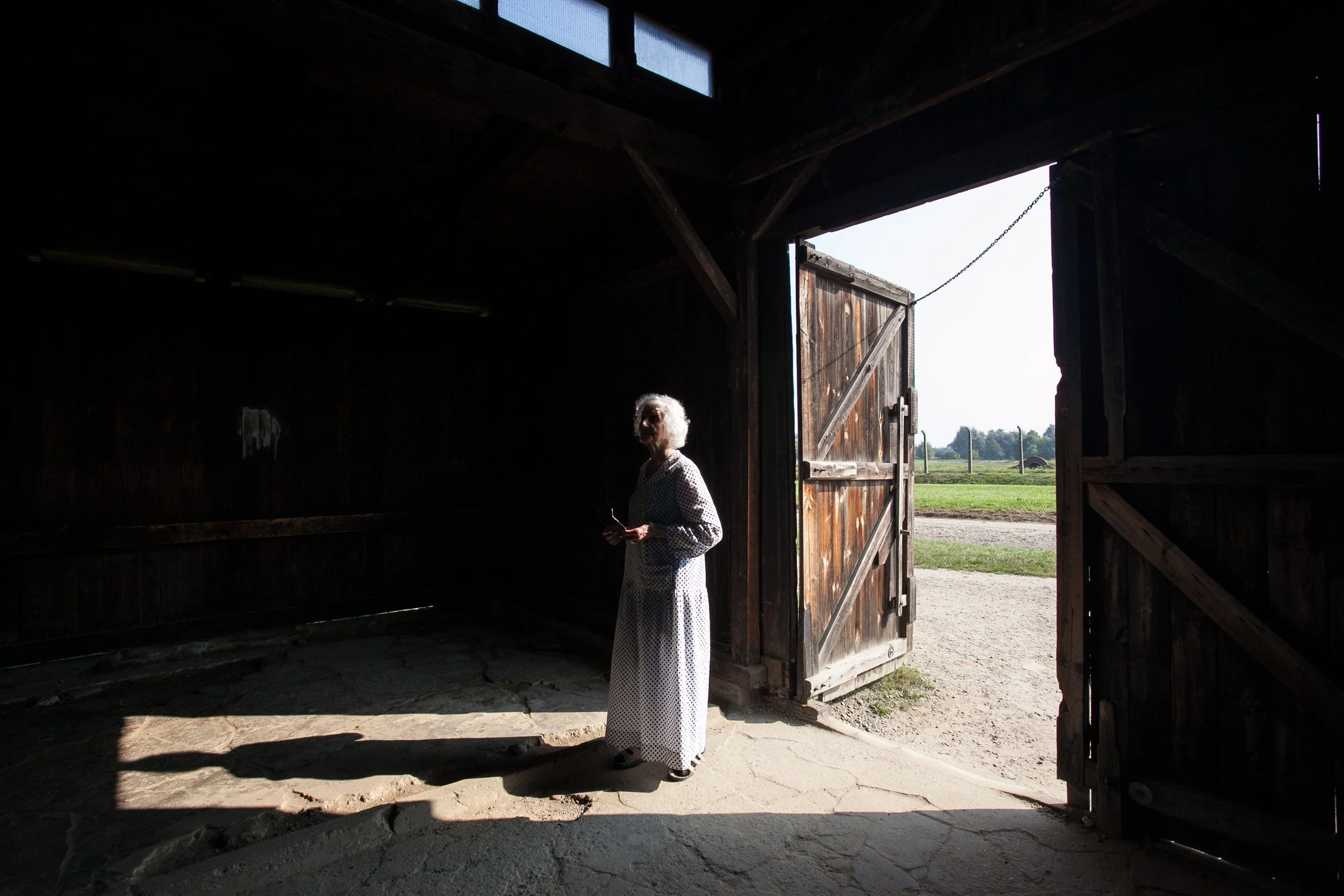
Éva stands in the doorway of a barrack at Auschwitz II-Birkenau. These unfinished stables, originally built for forty horses, became shelters where prisoners slept on bare boards and earth. Six weeks later, Éva was deported to Germany for forced labor.
Oświęcim, Poland, 2016.
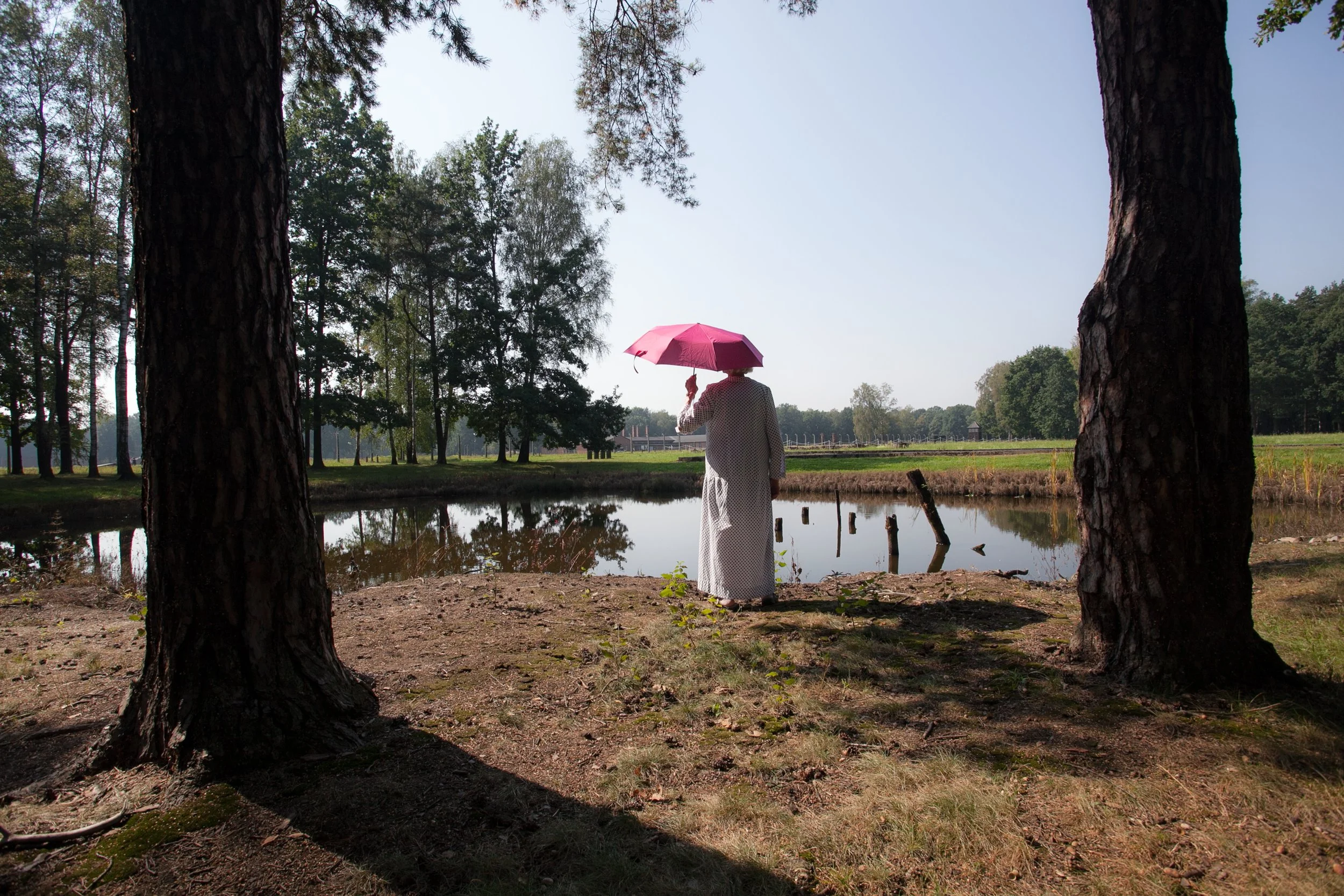
This is the place in Birkenau where the ashes of thousands of victims, including Éva’s parents and little sister, were cast into the marshland. By returning to this site, now marked by a memorial plaque, Éva fulfilled a deeply personal obligation to those she had lost.
Oświęcim, Poland, 2016.
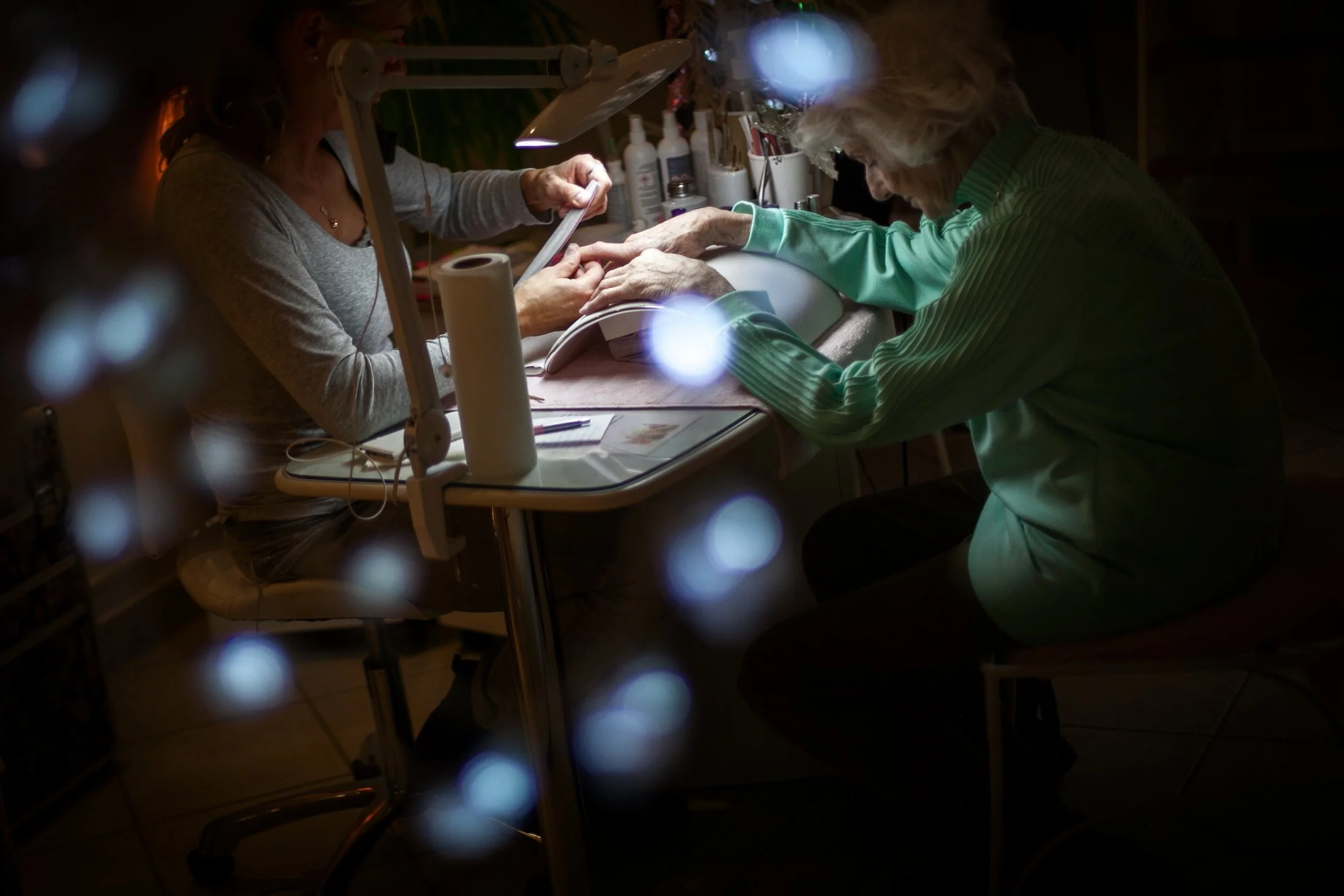
Éva at her manicurist. She took great pride in her appearance, and her hands and nails were always impeccably cared for.
Budapest, Hungary, 2020.
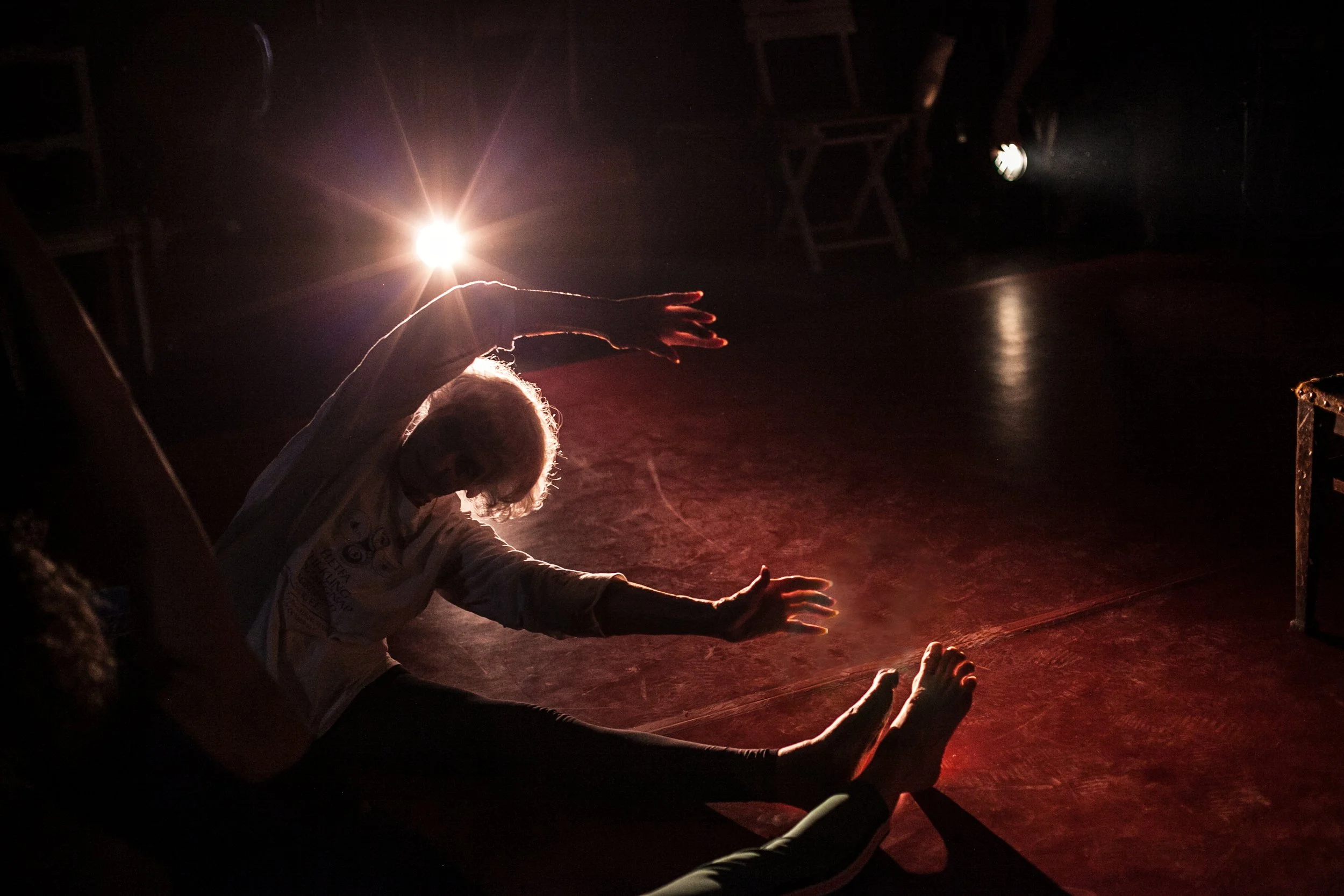
Éva Fahidi and Emese Cuhorka rehearse Sea Lavender on the studio stage of the Vígszínház.
Budapest, Hungary, 2020.

The “Subject and object of love”: Éva and Bandi - her partner, companion and love in the last 10 years of her life - during a holiday on the shores of Lake Balaton.
Budapest, Hungary, 2022.